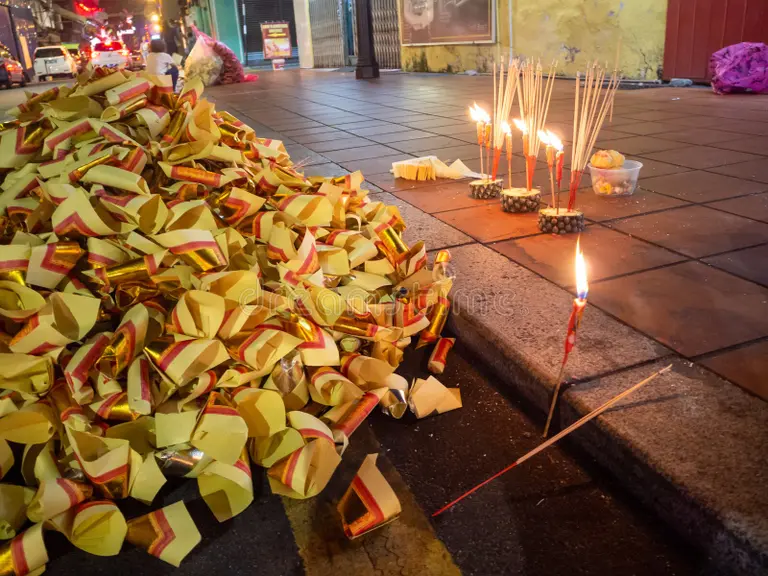
Every year as the seventh lunar month approaches, Malaysian Chinese families prepare their offerings, dim their porch lights a little later, and pass down a familiar set of reminders to younger generations: do not stay out too late, do not disturb the roadside altars, do not wear red.
The Hungry Ghost Festival, known in Mandarin as Zhongyuan Jie (中元节) and in Cantonese as Yue Laan Jit (盂蘭節), is one of the most spiritually significant observances in the Chinese calendar. In 2026, Ghost Month runs from 13 August to 10 September, with the main Ghost Day falling on 26 August, the 14th day of the seventh lunar month, when wandering spirits are believed to be at their most active.
Questions about Ghost Month taboos often arise during this period, including Hungry Ghost Festival do’s and don’ts, how to avoid bad luck, and whether certain activities should be postponed. While customs vary among families and religious traditions, many beliefs remain widely recognised throughout Malaysia.
Key Takeaways
- Hungry Ghost Festival do’s and don’ts revolve around traditional Ghost Month taboos and customs observed by many Chinese families in Malaysia.
- Common beliefs advise against staying out late, disturbing offerings, swimming after dark, and making major commitments during the seventh lunar month.
- Ways to avoid bad luck during Ghost Month traditionally include showing respect at religious ceremonies, participating in family rituals, and maintaining positive relationships.
- Customs surrounding travel, weddings, house moving, and clothing colours vary between families and are not universally observed.
- The Hungry Ghost Festival is ultimately a time for ancestor remembrance, gratitude, and preserving traditions that have been passed down through generations.
Why Is the Hungry Ghost Festival Celebrated?
The reason this festival is celebrated comes down to ancestral piety and spiritual protection.
According to Chinese folk beliefs, Taoist traditions, and Buddhist teachings, the seventh lunar month is a time when the gates of the underworld open, allowing spirits to visit the human world. Those with living relatives return home to visit the living, and their family members offer prayers, food, incense, and joss paper offerings in return.
For the homeless ghosts with no descendants to feed them, they wander and bring potential harm and misfortune to the living. Taoists and Buddhists perform special ceremonies to honour ancestral spirits and protect against such disturbances. For Buddhists, caring for ancestors builds good karma. For Taoists, appeasing them safeguards the living from misfortune.
Ghost Month Do’s and Don’ts: Common Taboos and Traditions
Understanding the rules for Ghost Month is important not just for those who practise the rituals, but for anyone living in or around Malaysian Chinese communities.
There is no universal set of rules that every family follows. However, several customs and taboos are widely observed throughout Malaysia during Ghost Month.
What Not to Do During Hungry Ghost Festival?
1. Do Not Stay Out Late at Night
Wandering spirits are most active after dark, particularly in dimly lit or isolated areas. Traditional beliefs discourage visiting forests, cemeteries, abandoned buildings, or quiet locations late at night during Ghost Month.
2. Do Not Whistle or Sing Alone at Night
In Chinese folklore, whistling at night is believed to attract unwanted spiritual attention. Spirits are believed to be attracted to joyful sounds and may interpret whistling or singing as an invitation to interact.
3. Do Not Hang Laundry Outside Overnight
Hanging garments that take on the silhouette of the human body are believed to attract wandering spirits, who may decide to take up residence in them. According to tradition, these visiting spirits can leave behind a misfortune-inducing aura on clothing accidentally brought back into the home. Bring all laundry indoors before sunset throughout the seventh lunar month.
4. Do Not Step on or Disturb Roadside Offerings
Temporary prayer altars and offering arrangements are set up along streets and walking paths throughout the month. Stepping on, kicking, or disturbing them is considered deeply disrespectful and is believed to provoke the spirits for whom the offerings were intended.
5. Do Not Pick Up Coins or Money Found on the Ground
Coins left on the ground are often offerings placed for wandering spirits. Picking them up offends the ghosts who were expecting them. Some traditional beliefs suggest that money found on the ground may have been used as an offering and is therefore best left untouched.
6. Do Not Stab Chopsticks Vertically Into Food
Placing chopsticks upright in a bowl of food mimics the way incense sticks are burned for the dead, making it a deeply inauspicious act at the dining table. Always rest chopsticks flat across the rim of the bowl.
7. Do Not Swim or Enter Open Water
Spirits are believed to linger near bodies of water during Ghost Month. The general advice is to avoid swimming pools, rivers, the sea, and any open water activities, especially after dark.
8. Do Not Make Major Life Decisions or Commitments
Starting a new business, signing important contracts, moving house, getting married, or making major investments are all considered inauspicious during Ghost Month. These activities are typically postponed until after the Gates of Hell close on the final day of the seventh lunar month.
9. Do Not Sit in the Front Row at Getai Performances
The front row of seating at every Getai performance is traditionally reserved for the spirits. Sitting there is considered both disrespectful and unlucky. Always leave those seats empty and choose a row further back.
10. Do Not Lean Against Walls or Trees at Night
Spirits are said to rest against walls and tree trunks after dark. Leaning against these surfaces at night during Ghost Month is believed to invite a spirit to make contact with you.
11. Do Not Call Out Names in the Dark
Calling out a person’s name at night is thought to attract spirits who may respond before the intended person does. This rule intensifies on Ghost Day itself, when spiritual activity is at its highest.
12. Do Not Open an Umbrella Indoors at Night
Umbrellas opened indoors at night are believed to invite wandering spirits to shelter beneath them with you. This superstition is observed with particular seriousness during Ghost Month.
13. Do Not Take Photos Outdoors at Night
Photographs taken after dark during Ghost Month are believed by many to risk capturing spiritual presences. Most cautious Malaysians avoid using their phone cameras outdoors at night, particularly on Ghost Day.
14. Do Not Look Into Mirrors Unnecessarily at Night
In Chinese folk beliefs, mirrors are sometimes regarded as symbolic gateways between the physical and spiritual worlds. During Ghost Month, unnecessary use of mirrors at night is avoided, as they are believed to reflect more than just the physical world.
15. Do Not React to Strange Occurrences
If you feel an unexplained chill, catch a sudden unfamiliar scent, or hear a voice calling your name when no one is nearby, ignore it entirely. Reacting strongly to these experiences is believed to signal vulnerability to wandering spirits and invite them to interact further. Keep calm, continue walking, and do not acknowledge what you experienced until you are safely indoors.
16. Do Not Tap Anyone on the Shoulder or Head
Chinese belief holds that every living person carries three invisible protective flames on the body: one on each shoulder and one on the forehead. These flames represent yang energy and serve as a natural barrier against spiritual disturbances. Tapping someone on the shoulder or head is believed to extinguish one of these flames, weakening the person’s spiritual protection and making them more susceptible to possession or misfortune.
17. Do Not Leave Your Slippers Pointing Toward the Bed
Footwear pointing toward the bed is believed to act as a directional guide for spirits, effectively showing them the way to where you sleep. Before bed throughout Ghost Month, ensure shoes and slippers are turned away from the bed or stored inside a cupboard.
18. Postpone Non-Essential Travel
Travelling during Ghost Month, particularly overnight journeys, solo trips, or travel through unfamiliar areas at night, is widely considered inadvisable in Chinese tradition. Mischievous spirits are believed to roam more freely during this period, and those away from home are thought to be at greater spiritual risk than those in a familiar, protected environment.
The Do’s: How to Observe Ghost Month Respectfully
1. Make Sincere Offerings for Ancestors And Wandering Spirits
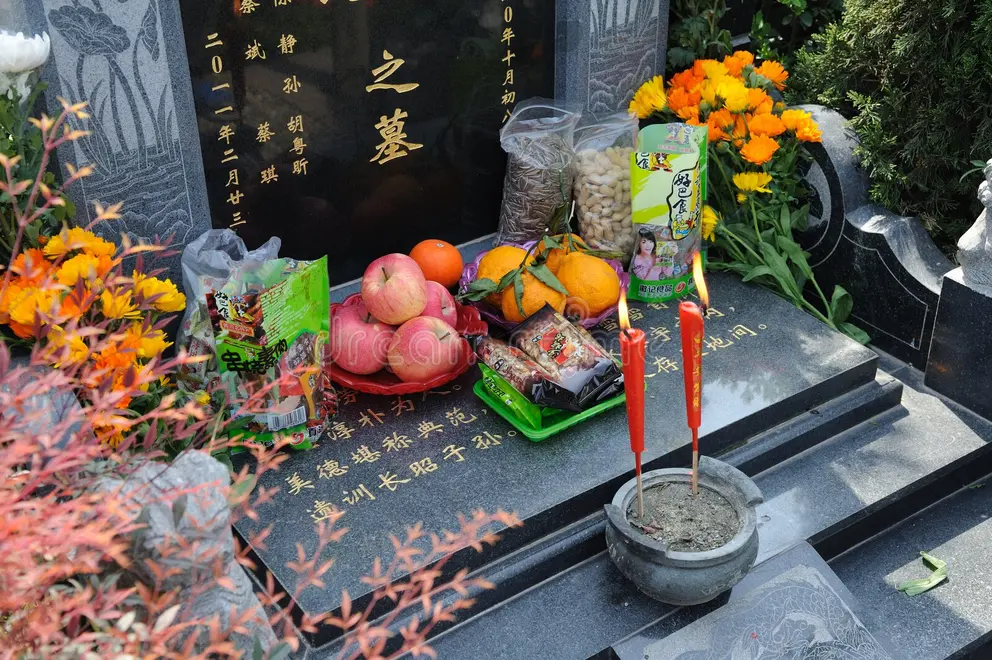
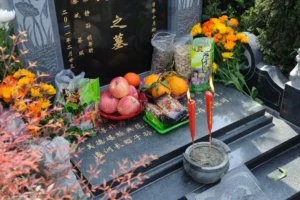
Prepare food, fruits, incense, and joss paper at your family altar or by the roadside on the appropriate days. Offerings made with genuine respect are considered far more effective than lavish but perfunctory gestures.
2. Attend Getai Performances as a Sign of Cultural Respect
These shows are not just entertainment; they serve a spiritual function. Attending them respectfully, including observing the empty front row, is a meaningful way to participate in the communal observance.
3. Pray at Temples or Your Family Altar
Visiting a temple during Ghost Month to offer incense and prayers is an act of active remembrance. It acknowledges the departed and earns goodwill from both ancestral spirits and protective deities.
4. Keep Your Home Well-Lit at Night
A brightly lit home is believed to deter wandering spirits from entering. Keeping porch and corridor lights on throughout the night is a widely practised protective measure across Malaysian Chinese households.
5. Carry Protective Items if You Observe Taoist or Buddhist Practices
Yellow charm papers, jade pendants, and amulets blessed by a temple are commonly worn during Ghost Month as spiritual protection.
6. Stay Positive and Avoid Arguments
Negative emotional energy during Ghost Month is believed to attract lower-order spirits who feed on discord. Maintaining a calm, respectful, and harmonious household is itself a form of spiritual protection.
7. Close Bedroom Doors Before Sleeping
Spirits wandering at night are believed to follow open corridors and doorways. Closing interior doors is a simple but widely observed protective habit throughout the month.
How to Avoid Bad Luck During Ghost Month?
Many people wonder whether there are specific ways to avoid bad luck during the seventh lunar month.
Traditionally, the focus is not on fear but on maintaining respectful behaviour.
Common practices include:
- Showing respect at religious ceremonies.
- Avoiding unnecessary conflicts and arguments.
- Being mindful of the offerings and prayer sites.
- Participating in family traditions where appropriate.
- Practising kindness and charitable acts.
Many religious leaders and cultural practitioners emphasise that Ghost Month is ultimately about respect, gratitude, and remembrance rather than superstition.
Can you wear red during Hungry Ghost Month?
One of the most frequently asked questions about Ghost Month is specifically about colour choices in clothing.
According to tradition, no. Red is among the colours most strongly associated with attracting spiritual attention, as it is considered the most visually striking colour to wandering spirits. Wearing red during Ghost Month is believed to draw their focus towards you.
Black carries similar warnings for the same reason, and this extends to dark nail polish as well. Women are additionally advised to wear flat shoes rather than high heels, as exposed heels are believed to leave one more spiritually vulnerable.
The safest choices during Ghost Month are neutral and light tones: white, beige, light grey, light blue, and soft pastels are all considered appropriate. White, though associated with mourning in Chinese culture, is regarded as a neutral and clean colour during Ghost Month rather than an inauspicious one.
Final Thoughts
Ghost Month is not a season of fear. It is a season of memory.
Hungry Ghost Festival continues to hold cultural and spiritual significance for many Chinese families in Malaysia. Although the customs and taboos observed during Ghost Month may differ between households, dialect groups, and religious traditions, the festival’s underlying values remain consistent: honouring ancestors, expressing gratitude, and preserving traditions that connect generations.
Care given to the deceased does not end at the funeral. It continues through Qingming, through death anniversaries, and through every Ghost Month when families gather again to remember. Approach this Ghost Month with respect, with intention, and with the knowledge that remembering the departed is one of the most meaningful things the living can do.